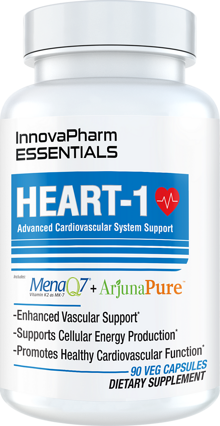
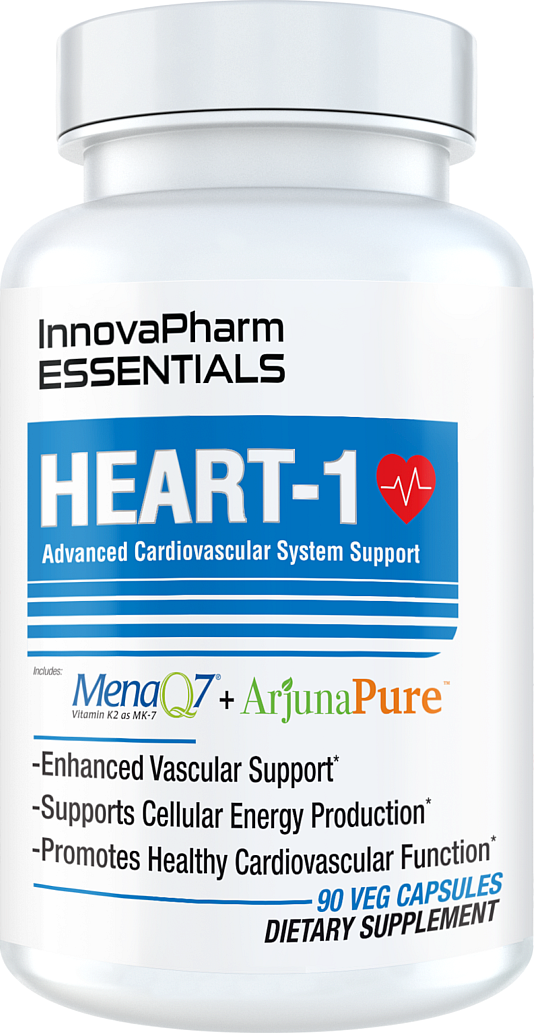
InnovaPharm Heart 1
A cardiovascular support formula aimed at people training hard, with a fully disclosed label and no proprietary blends.
Why this category exists in a supplement shop
Heart health is not a typical concern for a 25-year-old lifter, and we would rather explain why it belongs here than pretend otherwise.
Several things common in strength training put genuine load on the cardiovascular system:
- Heavy lifting produces very large acute blood pressure spikes. Straining against a heavy load with a held breath raises intrathoracic pressure enormously, and blood pressure follows. That is normal and transient — but it is real load
- High stimulant intake. Pre-workouts at 350 to 500mg of caffeine raise heart rate and blood pressure, and many people take them daily for years
- Carrying substantial mass. More tissue means more vasculature to perfuse and more cardiac work at rest
- Anabolic use. Prohormones and anabolic compounds affect blood lipids markedly — typically lowering HDL and raising LDL — and that is one of the better-documented consequences
- Diets high in saturated fat, which are common in bulking phases
None of that means lifting is bad for your heart. Resistance training has good cardiovascular research behind it. But the specific combination of heavy loading, high stimulants and, for some people, hormonal compounds is worth taking seriously rather than ignoring until your forties.
Knowing the categories helps you read any product in this space:
- Lipid-focused ingredients — plant sterols, citrus bergamot, red yeast rice, niacin. These target cholesterol fractions
- Blood flow and nitric oxide — nitrates, citrulline, garlic extract. These support vascular function and blood pressure
- Antioxidants and mitochondrial support — CoQ10 in particular, which is highly concentrated in heart tissue because of its mitochondrial density
- Omega-3 fatty acids, which have the deepest research base of anything in this category
⚠ One ingredient to check for specifically: if a cardiovascular formula contains red yeast rice, know that it naturally contains monacolin K — which is chemically identical to the prescription statin lovastatin. That is a genuine drug-equivalent compound in a supplement, and it should not be combined with a prescribed statin. Check your label.
⚠ The honest part: this is where bloodwork matters most
We say "test rather than guess" on several pages. Here it is the whole point.
Cardiovascular risk is invisible. You cannot feel your cholesterol, your blood pressure or your triglycerides. People feel fine right up until they do not — which is precisely why these are measured rather than sensed.
What is worth having measured:
- A full lipid panel — total cholesterol, LDL, HDL and triglycerides
- Blood pressure, measured properly and repeatedly rather than once
- ApoB if you can get it, which many clinicians regard as a better risk marker than LDL alone
If you have ever run an oral anabolic compound, this is not optional. Those markers move substantially, and knowing where you stand is the entire reason to take any of this seriously.
And if your numbers are genuinely out of range, that is a conversation with your doctor rather than a supplement purchase. A cardiovascular support formula is a reasonable addition to good habits. It is not a treatment, and we will not sell it to you as one.
What actually protects your heart
None of these are in a bottle, and all of them outperform what is.
- Cardiovascular exercise. If your training is entirely resistance-based, adding genuine cardio is the single highest-value change available
- Blood pressure control, including keeping an eye on total daily caffeine
- Not smoking
- Bodyweight and body fat
- Sleep, which affects blood pressure directly
- Dietary pattern — fibre, unsaturated fats and vegetables, rather than any single nutrient
Specs
| Formula | Multi-ingredient cardiovascular support |
| Stimulants | None |
| Label | Fully disclosed, no proprietary blends |
How to take it
- Follow the label, with food — several cardiovascular ingredients are fat-soluble.
- Daily and consistently. Lipid changes take eight to twelve weeks to show on a blood test.
- Retest after about three months and judge it on numbers rather than feel.
- ⚠ Check with your doctor if you take any cardiovascular medication — statins, blood pressure drugs and blood thinners all have real interactions with ingredients in this category.
Who this is for
- Anyone using or recovering from oral anabolic compounds, where lipid effects are well documented
- People taking high-stimulant pre-workouts regularly
- Anyone carrying substantial mass
- Older lifters thinking about long-term health rather than the next block
- People whose bloodwork has flagged something borderline, alongside medical advice
Who this is not for
Anyone with diagnosed cardiovascular disease, or out-of-range numbers, as a substitute for medical treatment. Speak to your doctor.
Anyone taking a statin, if the formula contains red yeast rice. Check the label.
Anyone on blood pressure medication or blood thinners, without checking.
Anyone who has never had bloodwork. Get the numbers first — otherwise you have no way to know whether this is doing anything.
Not for anyone under 18, pregnant or nursing.
Stack it with: fish oil, which has the strongest research base in this area, and CoQ10 — particularly if you take a statin, since statins reduce your own CoQ10 production.
Frequently asked questions
Why would a lifter need cardiovascular support?
Heavy lifting produces large acute blood pressure spikes, high-stimulant pre-workouts raise heart rate and blood pressure, carrying substantial mass increases cardiac work, and anabolic compounds affect blood lipids markedly.
What should I get tested?
A full lipid panel, blood pressure measured properly and repeatedly, and ApoB if available — many clinicians regard it as a better risk marker than LDL alone.
Will I feel it working?
No. Cardiovascular markers are invisible, which is exactly why they are measured rather than sensed. Judge it on bloodwork after about three months.
What is red yeast rice?
An ingredient in some cardiovascular formulas that naturally contains monacolin K — chemically identical to the prescription statin lovastatin. Do not combine it with a prescribed statin.
Can I take it with blood pressure medication?
Check with your doctor. Several ingredients in this category affect blood pressure and can compound with medication.
Do I need this if I use prohormones?
Support is sensible, but bloodwork is what actually matters — lipid effects from oral compounds are well documented and substantial.
What protects the heart most?
Cardiovascular exercise, blood pressure control including total caffeine, not smoking, bodyweight, sleep and overall dietary pattern.
Should I add cardio if I only lift?
Yes. If your training is entirely resistance-based, adding genuine cardiovascular work is the highest-value change you can make.